


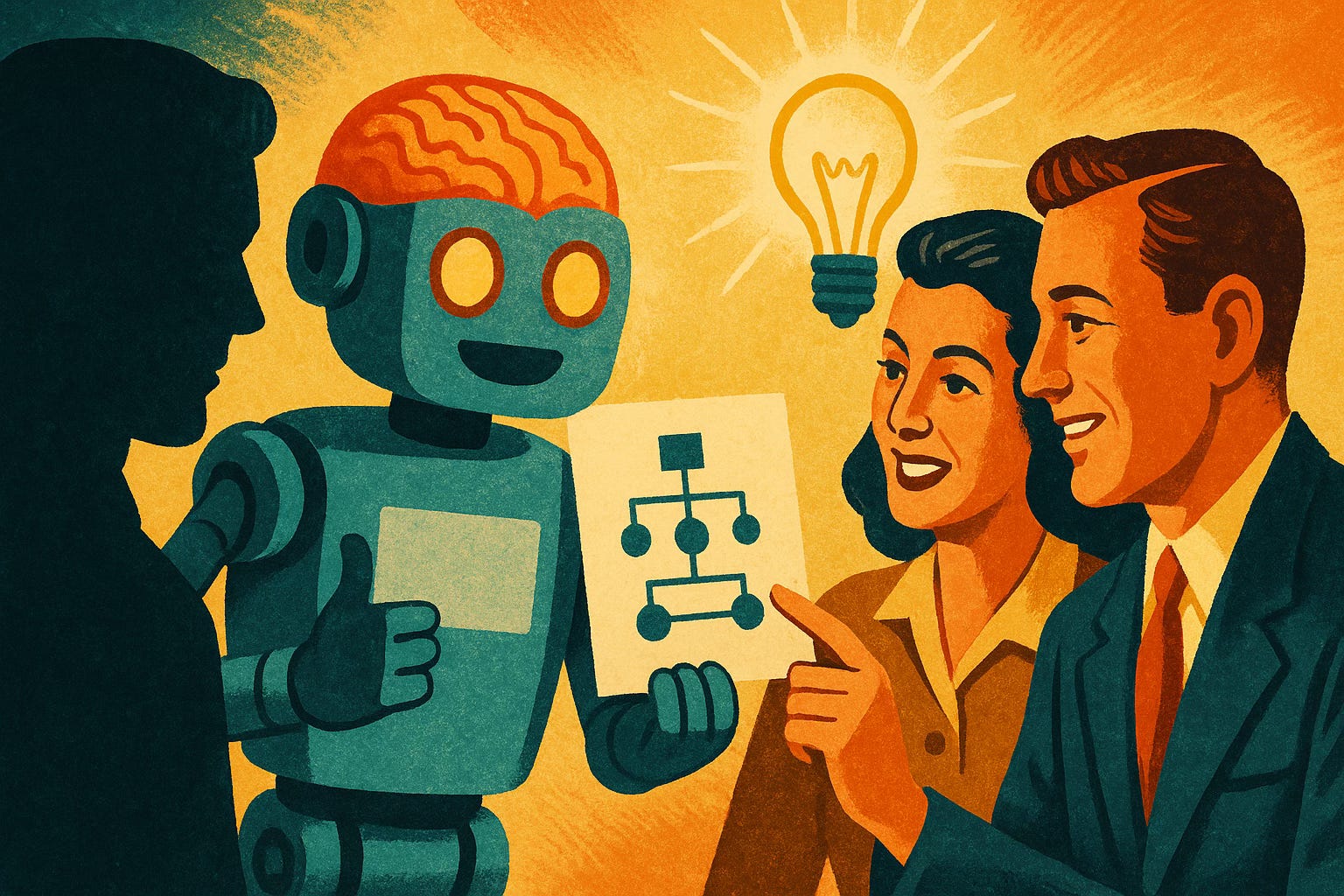
The success of KM initiatives, whether focused on reuse, collaboration, or innovation, hinges fundamentally on people. While technology provides the essential scaffolding to manage content and make it accessible, human roles define the practices and capabilities required not only to create new knowledge, but to capture and transfer that knowledge in context.
Organizations must resist the urge to deploy technology first and then search for people to run it later. Instead, a careful definition of roles and responsibilities must align with the strategic intent of AI-powered KM, embedding knowledge work into the flow of day-to-day business. We must look beyond merely creating new titles and focus on the tasks that elevate the organization’s competence and capacity for learning.
Here are the primary roles an organization should consider when structuring a robust knowledge management program, acknowledging that many of these tasks can and should be integrated into existing job descriptions:
Chief Knowledge Officer (CKO)
The existence of a CKO is not necessary for every organization, particularly those where knowledge sharing is already an organic and embedded process. However, for organizations whose product is knowledge, or those needing a strong catalyst for knowledge-oriented change management and a reimaging of knowledge-related processes and practices, the CKO is essential.
The CKO is not the owner of organizational knowledge; rather, they serve as the catalyst for empowering individuals, teams and functions with knowledge-sharing practices and policies. Their responsibilities are highly strategic and operational, including:
Knowledge Environment Design: The CKO should be the chief architect of the knowledge environment, owning the specifications for infrastructure, content design (e.g., best practices and lessons learned), and the tools for converting tacit knowledge into explicit knowledge. In today’s AI-driven world, the CKO and the CAIO, or other AI leader, should synchronize their efforts to unleash organizational knowledge.
KM Integration: They collaborate with other process owners to integrate KM tasks, such as sunset reviews on projects and the use of collaboration spaces, into core business processes.
Value Reporting and Gap Elimination: They function as KM’s analyst and reporter, creating knowledge metrics tied to strategic goals. They identify knowledge gaps that may necessitate training, hiring, or even the acquisition of other firms.
Organizational Transformation: They must be a leader who can overcome internal politics, move the organization toward knowledge sharing, and promote the adaptive, flexible, and evolutionary models required for AI-first businesses.
The CKO should be a senior manager and a member of the senior management team, not merely a department head in IT or library services.
Knowledge Stewards and Content Managers
This role concentrates on the local ownership, life cycle, and quality control of codified assets. We highly encourage the development of Knowledge Stewards, often closely associated with process ownership. With AI’s reliance on unstructured content, Knowledge Stewards can and should act as the front-line leaders in preparing legacy content for AI use.
Knowledge Steward: Encourages the capture and revision of knowledge. In a Communities of Practice (CoP) context, they actively nurture the CoPs, helping members transform their knowledge into usable forms and bridge boundaries between communities.
Content Manager: Responsible for organizing and distributing information based on the interests and needs of the user community. This includes cataloging content, determining what critical knowledge should be contributed to repositories, and ensuring a rigorous review process to make only the highest-quality content available. They often act as an “informed layer” between information specialists and content experts.
Knowledge Brokers and Facilitators
These roles are crucial for maximizing knowledge transfer, particularly tacit knowledge, which cannot be easily codified.
Knowledge Broker: Connects knowledge seekers directly to sources of tacit expertise. This function is vital in organizations, often performed informally by individuals who know who knows what, such as Librarians.
Facilitator: Maintains discussions, keeps dialogue business-appropriate, and helps manage the visible aspects of community events. In a CoP structure, facilitators are often part-time responsibilities of key employees and are critical for ensuring user questions are answered.
Taxonomists and Information Architects
These specialists provide the structure necessary for efficient content discovery and access.
Taxonomist: Creates enterprise taxonomies applied by content managers or automated tagging systems. They are indispensable for moving beyond simple portals to creating more comprehensive representations of knowledge and relationships within the corporate data model.
In an AI world, taxonomists are responsible for creating and maintaining the ontologies and other representations necessary to power knowledge graphs and graphRAG implementations.Information Architect: Focuses on packaging knowledge to ensure that content is consistent, meaningful, and labeled in a way that is relevant to the end-user, often arbitrating across knowledge functions (e.g., ensuring marketing information is usable by sales personnel).
Knowledge Engineers
This role traditionally focused on complex systems that involve artificial intelligence (AI). A knowledge engineer is skilled in writing rules, developing cases for Case-Based Reasoning (CBR) systems, and coding reasoning algorithms. They are also skilled in knowledge acquisition techniques necessary for extracting deep semantic knowledge, a difficult task.
Some might argue that knowledge engineers have become obsolete in the era of generative AI, much of the governance of Large Language Models requires rules and predicate logic to, for instance, frame guardrails. Knowledge Engineers may no longer be at the forefront of mapping expertise, but they are crucial to ensuring the safety of modern AI implementations.
Integration: Making Knowledge Management the Way We Work
Focusing on these key roles should not lead to the creation of new organizational silos. Knowledge management is intrinsically intertwined with the core functions of the business: People, Process, and Technology.
The ultimate goal is for knowledge capture and sharing to become seamlessly embedded in daily business processes, making it a natural part of the workflow, rather than a separate task or “add-on” activity. That aligns with a fourth core function: encouraging connection and social context.
KM roles must integrate well with Human Resources (HR) for competency mapping, performance evaluation, and the development of learning strategies. They must partner with IT to ensure the technology architecture supports common tools and processes for sharing and collaborating, rather than proliferating competing, fragmented solutions.
Finally, strategic integration requires that CKO functions, such as knowledge gap elimination and value reporting, are closely aligned with the strategic planning and operational implementation of business unit leaders.
By defining KM roles based on function and then embedding these functions across the organization, we move toward a state where every employee is recognized as a knowledge worker/knowledge manager, which is the necessary prerequisite for achieving competence, adaptation, and sustained innovation.